Light Up Lancaster
Illuminating the heart of our city.
Light Up Lancaster is a architectural lighting initiative designed to illuminate the façades and streetscapes of Downtown Lancaster — including West King Street, East King Street, North Queen Street, and Penn Square.
Through thoughtfully designed lighting, the project highlights Lancaster’s modern and historic architecture while creating a safer, more welcoming, and more vibrant nighttime environment.
By combining preservation, placemaking, and economic vitality, Light Up Lancaster strengthens downtown as a destination for residents, workers, and visitors alike — ensuring Lancaster’s beauty and character shine after dark.
Phase One :
New Lighting Will Be Installed at 15 Properties in Early 2026.
Phase One focuses on implementing a coordinated façade lighting plan across key downtown corridors identified in a 2024 comprehensive lighting study. This phase prioritizes highly visible, architecturally significant properties to establish a cohesive nighttime identity and demonstrate the transformative impact of thoughtful illumination.
New lighting installations enhance safety by reducing dark gaps, improve pedestrian visibility, and encourage walking, shopping, and dining after dusk. At the same time, the project celebrates Lancaster’s architectural heritage — revealing historic details, craftsmanship, and design that are often lost after sunset.
Historic Architecture :
Honoring Lancaster’s Architectural Heritage
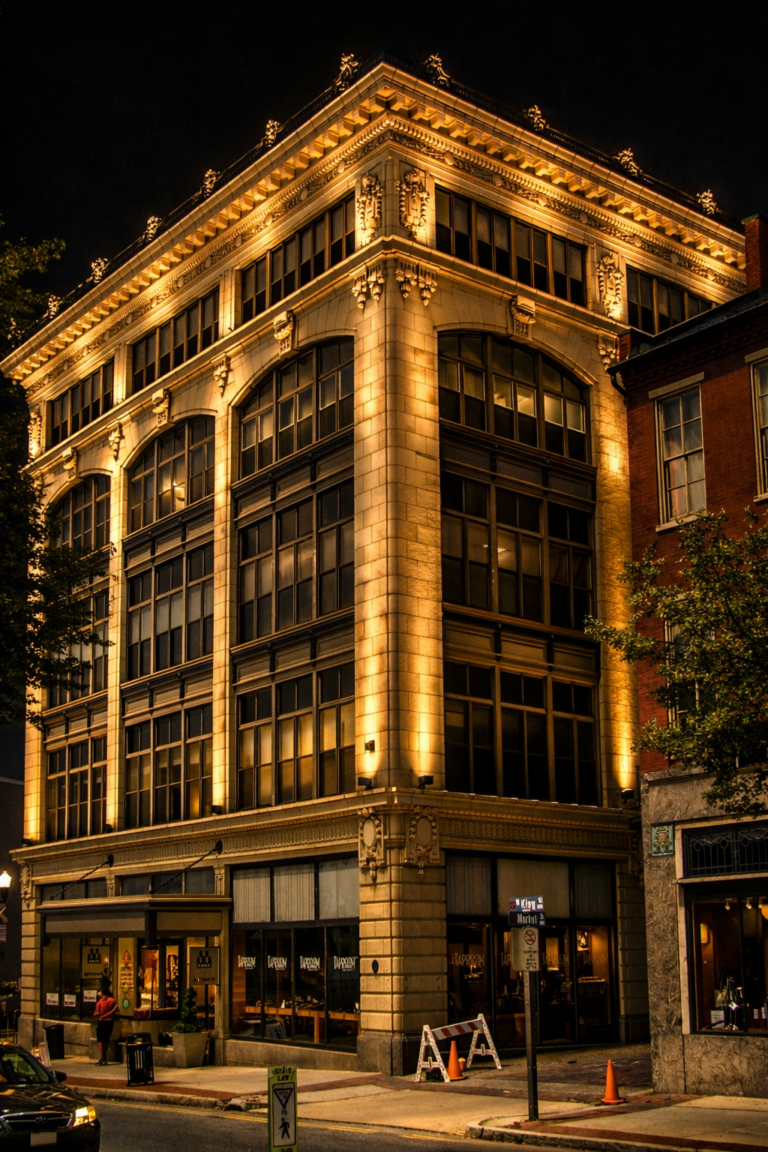
Lancaster’s downtown is defined by historic buildings that reflect the city’s craftsmanship, civic pride, and commercial history. Through architectural lighting, Light Up Lancaster will reveal these details after dark—strengthening the public realm and connecting people to Lancaster’s identity and sense of place.
All lighting improvements will be visible from the public right-of-way, ensuring the benefits of the project are shared by all. Below are several key historically significant buildings that will be illuminated in Phase 1.
Photography Courtesy of Matthew Tennison, Tennison Photography and Jeremy Young of Lancaster City Alliance.
What Lighting Creates:
How Thoughtful Illumination Transforms Downtown After Dark
Thoughtful lighting does more than brighten a street — it shapes how people see, move, and experience downtown after dark. By revealing architectural character, linking key blocks, and improving clarity along the streetscape, coordinated illumination creates an evening environment that feels welcoming, vibrant, and unmistakably Lancaster. These three pillars guide every phase of Light Up Lancaster.
A More Welcoming Downtown
Improved lighting coverage reduces dark spots, enhances pedestrian visibility, and strengthens the overall sense of security — encouraging people to spend more time downtown in the evening.
A Stronger Downtown Economy
By extending vibrancy beyond daylight hours, Light Up Lancaster supports small businesses, increases foot traffic, and reinforces downtown as a cultural and commercial hub.
A Cohesive Nighttime Identity
Coordinated lighting creates visual continuity across buildings and blocks, transforming downtown into a unified, inspiring nighttime environment that reflects Lancaster’s ambition and character.
Project Partners: